
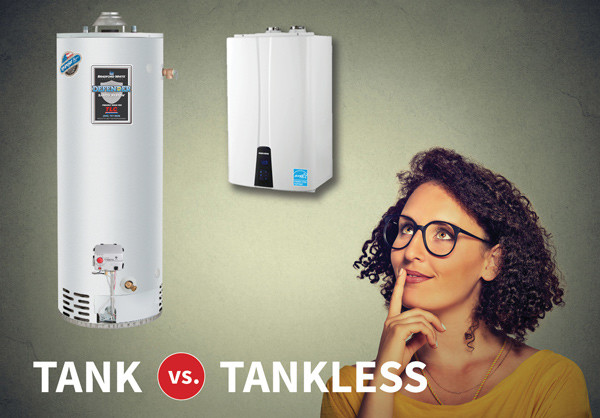
Tank and Tankless water heaters both provide hot water
But what are the pros and cons of each?
More and more homeowners are choosing tankless, but is it the right choice for you? Is it worth the additional installation expense? What really is the difference… they both heat water right? We’ll explore the pros and cons here in this chapter. Let’s start with traditional tank water heaters.
Pros of Tank Water Heaters
While they are not as water or energy efficient as tankless water heaters, convention tank water heaters have numerous benefits, including:
Lower installation cost
Tank water heaters installs are less expensive than tankless to install.
Easy replacement
Typically you’re just replacing the hot water tank for the same-sized unit. However, new Federal Energy Standards have increased the size of tank water heaters. A professional will have to ensure that the larger units will fit in the existing space when replacing.
Cons of Tank Water Heaters
Traditional tank water heaters have been a reliable source of water heating for many years. However, while tank water heaters are an efficient way to heat your water there are some cons if you’re considering replacing.
Higher energy costs
Since hot water is stored in the tank, the gas or electricity needs to run more than a tankless unit to keep the water hot. The temperature will be maintained regardless of whether you need hot water or not.
Can run out of hot water
Once the hot water is used in the tank you will not have any more hot water until the tank is refilled and heated again. This can happen if you have multiple people or appliances using hot water at once.
Takes up more space
Tankless units take relatively little space, while a tank water heater needs space for the tank. Another thing to consider is that energy standards have required manufacturers to make tank water heaters wider to insulate and hold heat better. Ask your professional about how this affects replacement.
Shorter life span
Tank water heaters usually last between 12-15 years, while tankless water heaters can last approximately 20 years. Tankless water heaters have grown in popularity in the last couple of years. Here we will weigh the pros and cons of converting to a tankless water heater.
Pros of Tankless Water Heaters
Tankless water heaters are energy efficient and have many pros to converting:
On demand hot water
Tankless gives you unlimited hot water over an extended period of time. Back to back showers, no wait times for water to reheat. You can also shower and run the dishwasher or washing machine without worrying about running out of hot water. Extremely effective for larger families.
Lower energy costs
Tankless water heaters only heat water when it is needed. You will reduce your energy costs because you will only need to heat water as you need it. Consider the amount of energy it takes to keep 40, 50, or 75 gallons of water hot constantly, that can add up.
Takes up less space
While this seems trivial, we mentioned in the cons for tank water heaters that energy standards have made water heaters wider. Meaning, when it’s time to replace your water heater a new water heater that is the same size as your existing water heater, it may not fit in the same space the existing unit is located at. This alone may have you consider tankless.
Longer life span
Tankless water heaters can last 20+ years if well maintained. In some cases that may be double a tank water heater’s lifespan. So now that we’ve talked about the great qualities of tankless, lets discuss the drawbacks so you can weigh your options effectively.
Cons of Tankless Water Heaters
Tankless water heaters do have some drawback that are described below:
Higher installation costs
Tankless water heaters installation costs are more than a tank water heater. Also, there may be retrofitting and additional plumbing, piping needed when replacing a tank water heater. You should discuss your options with a professional.
More internal parts
Tankless water heaters are compact but have more internal parts than traditional water heaters. They also require maintenance at least once a year to inspect and ensure proper operation. If you have hard water you may need additional maintenance to remove scale buildup or a water softener.

Download Our Free Tankless Water Heater Buying Guide
Get valuable information if you are considering replacing your existing water heater with a new tankless water heater. This guide will help you get informed so you can decide if tankless is a good option for your home.