special offers
What Can Go Down Your Toilet and Drains?

Modern plumbing, including toilets and drains, have been incredible for public health. Imagine how unsanitary life would be if we couldn’t send waste down the drain. That said, your plumbing system can’t handle everything. It’s designed to handle only a few specific things.
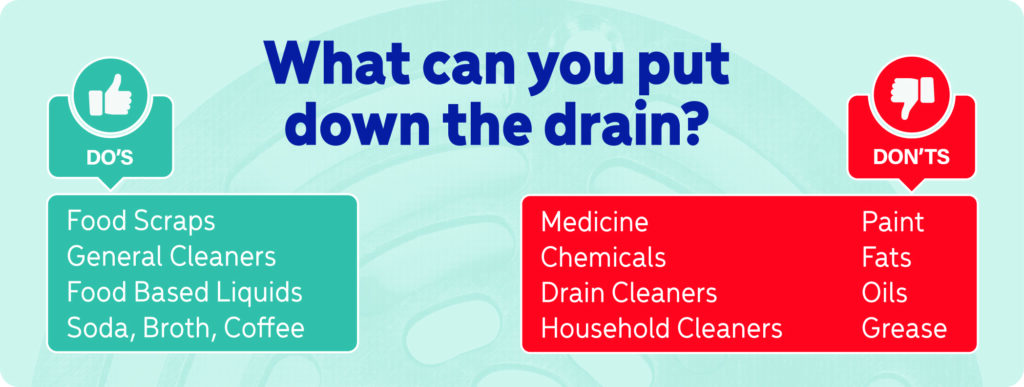
When it comes to your toilet, only flush poop, pee, and toilet paper. Nothing else. For your kitchen and bathroom drains, stick to natural cleaners like vinegar and baking soda, regular dish or hand soap, and small food scraps in the garbage disposal.
What Can You Flush Down the Toilet?
To prevent a clogged toilet and backups, stick to the 3 Ps: poop, pee, and toilet paper. These are the only items your toilet is designed to handle. More importantly, what can’t you put down the toilet?
What Not to Flush Down the Toilet
A common misconception is that flushable wipes are safe to flush, but they aren’t. The term “flushable” isn’t backed by strict industry standards. Companies test their own products, and those tests don’t always reflect real plumbing systems.
Why do flushable wipes cause clogs? Flushable wipes don’t break down as quickly as toilet paper does. Toilet paper dissolves in water into small pieces, making it easier to move through your plumbing and into the sewer. Wipes tend to stay intact, which leads to clogged drains or sewer lines.
Flushable wipes are one of the most common causes of toilet and sewer line blockages. The same goes for feminine products, paper towels, Q-tips, floss, and other bathroom items. These products can get caught in your pipes and slowly build up. Many are designed to absorb water, so they expand after flushing and make the problem worse. That’s only the toilet, but what about the other drains in your house?
What Can You Put Down the Drain?
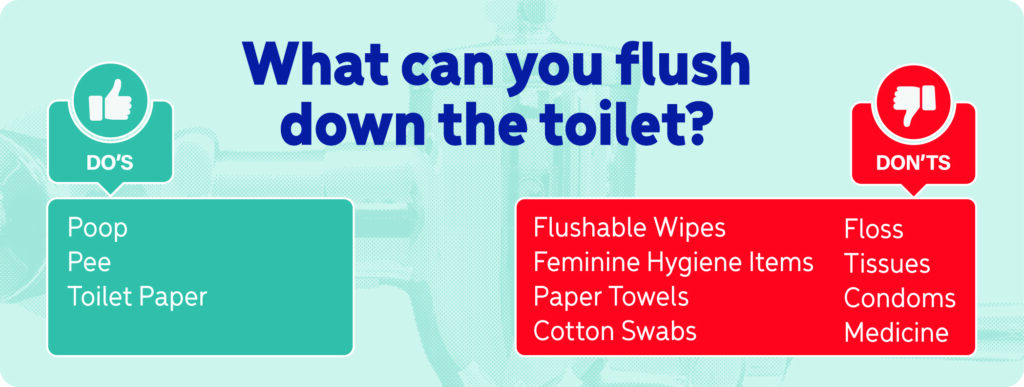
Your kitchen and bathroom drains are more complex than you might think. Here are a few examples of items that can safely go down the drain: small food scraps (only if you have a garbage disposal), soap, vinegar, baking soda, coffee, milk, juice, non-fatty liquids, and mild home cleaners.
Now, let’s discuss what should not go down the drain.
What Not to Put Down the Drain
Before pouring anything down the drain, ask yourself a few simple questions.
First, ask, will it harden? Paint and grease are good examples. They may go down as liquids, but they can harden inside your pipes, eventually causing a blocked drain. The buildup happens slowly, but over time, you’ll notice that sinks and tubs drain more slowly. A common solution for this type of buildup is hydro jetting.
Second, should this enter the water supply? Medications, paint, solvents, pesticides, and other harsh chemicals shouldn’t go down the drain. While water treatment plants remove many contaminants, they aren’t designed to remove everything. Trace amounts of medications have been found in drinking water. High concentrations of pesticides and fertilizers can also harm plant and animal life. Drinking water is monitored for unsafe levels, but making sure you dispose of it in the right place helps reduce pollution at the source.
Finally, ask if these are harsh chemicals? Drain cleaner is one of the biggest offenders. Many people use it to prevent clogs, but the harsh chemicals can eat away at pipes and cause bigger problems over time. This applies to other strong chemicals as well, including ammonia-based cleaners, degreasers, and paint or wood-finishing solvents. These should never be poured down the drain.
PRO TIP: Instead of using drain cleaner, we recommend using enzymes. They will help naturally eat away at the bad stuff in your pipes, without corroding them.
How Much Does It Cost to Fix Blocked or Clogged Drains?
You might be wondering how serious it can really be.
Clearing a clog can cost anywhere from $100 to $400, depending on the severity and the service needed. If pipes need to be replaced or cleanouts installed, costs can climb into the thousands.If you stick to the 3 P’s for your toilet, and the items listed above for your drains (including emzymes for drain maintenance),you shouldn’t need to worry.
Let the Experts Help!
If you’re dealing with slow drains or a backed-up toilet, give us a call (505) 761-9644 or schedule online. We have a great team with all the right tools and experience to take care of any toilet, bathroom, or kitchen drain issues!